
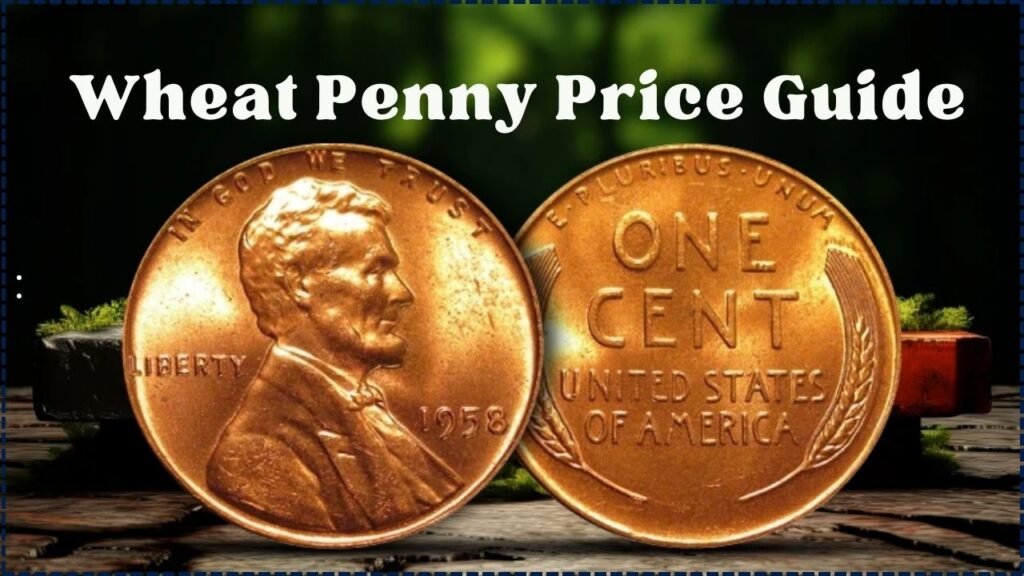
The Wheat Penny Price Guide helps collectors and the public understand how U.S. Lincoln cents minted between 1909 and 1958 are valued today, explaining why most trade for only a few cents while rare dates, minting errors, and high-grade examples can command prices reaching into the thousands.
Table of Contents
Wheat Penny Price Guide
| Key Fact | What It Means |
|---|---|
| Wheat pennies were minted from 1909–1958 | They span the first 50 years of the Lincoln cent |
| Most are worth only a few cents | High survival rates keep prices low |
| Condition matters more than age | Grading often outweighs date alone |
| Errors and key dates drive high prices | Scarcity creates collector demand |
| Counterfeits are common for rare years | Authentication is essential |
The Wheat Penny Price Guide shows that value is not defined by age alone, but by scarcity, preservation, and history—factors that continue to shape how these small copper coins are viewed in today’s market.
What Is a Wheat Penny?
Wheat pennies are U.S. one-cent coins officially known as Lincoln cents with a wheat-ear reverse design. They were introduced in 1909 to mark the 100th anniversary of Abraham Lincoln’s birth and remained in circulation until 1958.
The design features Lincoln’s profile on the front and two stylized wheat stalks on the back, symbolizing agricultural prosperity. In 1959, the reverse was replaced with the Lincoln Memorial, ending the wheat penny era.

Why the Wheat Penny Price Guide Exists
The Wheat Penny Price Guide exists because the series combines three qualities that invite confusion: long production, widespread circulation, and a small number of valuable exceptions.
Millions of Americans have inherited jars, rolls, or albums of wheat pennies. Many assume age alone equals value. Market data shows that assumption is often incorrect.
The guide provides structure by separating common coins from collectible ones, helping owners understand what truly affects price.
The Four Factors That Determine Wheat Penny Value
1. Date and Mint Mark
Date is the first filter used by collectors. Early production years, especially before 1930, receive closer scrutiny.
Mint marks also matter. Coins struck outside Philadelphia—primarily at Denver and San Francisco—were often produced in lower quantities, making some scarcer today.
However, scarcity alone does not guarantee high value. Survival rates and condition still play decisive roles.
2. Condition and the Role of Grading
Condition is measured on a standardized scale ranging from heavily worn to mint state. Minor differences in wear, color, and surface quality can result in large price gaps.
A common-date wheat penny may be worth only a few cents when worn, yet sell for several dollars if preserved in uncirculated condition. For scarcer dates, the difference can reach thousands.
Professional grading services provide third-party evaluations that reduce disputes over condition and authenticity.
3. Minting Errors and Varieties
Errors occur when something goes wrong during production. These mistakes were unintended, and many were caught before circulation. A few escaped.
Some varieties, such as doubled dies or missing mint marks, are now highly sought after. Their value comes from a combination of scarcity and visibility—errors that are easy to see attract more collectors.
Not all errors are valuable. Minor flaws often add little or no premium.
4. Metal Composition and Historical Context
Most wheat pennies were struck in bronze, an alloy of copper, tin, and zinc. During World War II, copper shortages forced a temporary change to steel-coated cents in 1943.
This brief shift created one of the most famous collecting stories in U.S. coinage, contributing to confusion and misinformation about value.
Common Wheat Pennies: The Reality for Most Coins
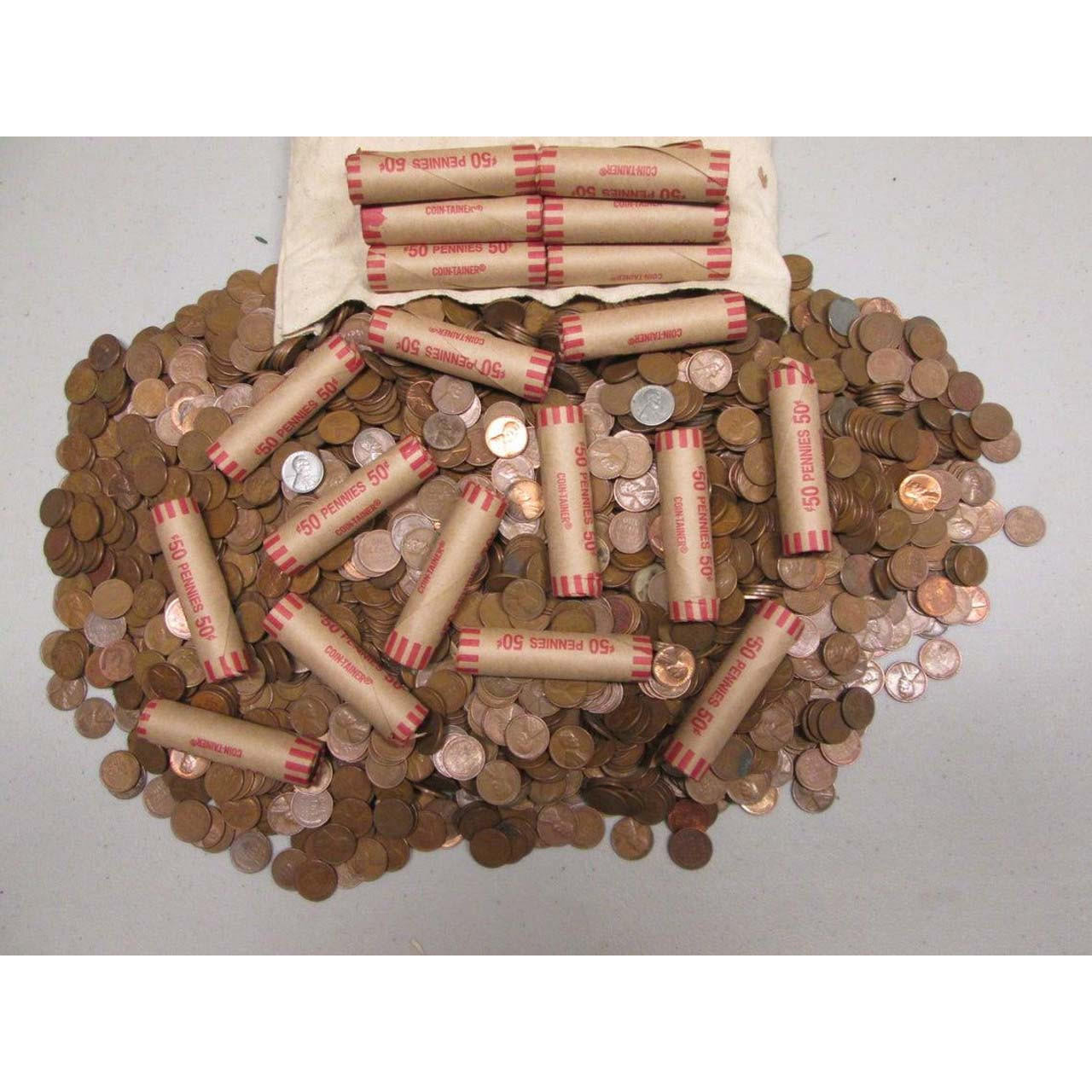
The majority of wheat pennies found today date from the 1930s through the 1950s. These coins were produced in enormous quantities and saved by the public in large numbers.
In circulated condition, many trade for three to ten cents. Bulk quantities often sell by weight rather than by individual coin.
Even so, collectors continue to buy these coins for educational purposes, album completion, and historical interest.
Key Dates That Shape the Wheat Penny Market
Some dates consistently appear in price guides because they combine low production with strong collector demand.
Early San Francisco and Denver issues are frequently cited, as are certain years from the 1910s and early 1920s when mintages were lower.
These coins are not necessarily rare in absolute terms, but they are rare in high condition, which is what collectors prioritize.
Famous Errors and Why They Matter
The 1955 Doubled Die Obverse
This variety displays clear doubling in the date and lettering, visible without magnification. Its dramatic appearance has made it one of the most widely recognized U.S. coin errors.
Because it is easy to identify, demand remains strong across a wide range of conditions.
The 1922 “No Mint Mark” Cent
This coin resulted from worn dies used at the Denver Mint, eliminating the mint mark entirely. Authentic examples show other diagnostic features beyond the missing letter.
Collectors prize these coins, but specialists warn that altered coins are common.
The 1943 Bronze Penny: Separating Fact From Myth
In 1943, pennies were struck in zinc-coated steel. A small number of bronze planchets from the previous year were accidentally used.
Authentic examples are extremely rare. Their high auction prices have fueled public fascination, but also widespread misunderstanding.
Experts emphasize that most copper-colored 1943 pennies are either altered steel coins or modern replicas. Proper testing and authentication are essential.
The Risk of Counterfeits and Altered Coins
As values rise, so does fraud. Common alterations include adding mint marks, removing them, or changing dates.
Professional graders caution that visual inspection alone is often insufficient for high-value coins. Weight, metal composition, and die characteristics must all be examined.
This risk explains why certified examples dominate the high end of the market.
How Collectors and Dealers Use the Wheat Penny Price Guide
The Wheat Penny Price Guide is not a fixed price list. Instead, it provides ranges based on recent transactions, condition, and market demand.
Dealers use it as a reference point, adjusting offers based on inventory and buyer interest. Collectors use it to decide which coins merit professional grading.
Prices can fluctuate, but long-term trends tend to be stable for both common and rare issues.
Educational and Historical Value
Beyond money, wheat pennies hold educational significance. They are often used to teach basic economics, U.S. history, and the fundamentals of collecting.
Their long circulation period covers major events including two world wars, the Great Depression, and postwar expansion.
For many collectors, that historical connection matters as much as resale value.
Market Outlook: What Comes Next
Analysts observe that interest in wheat pennies remains steady rather than speculative. Prices for common coins show little movement, while top-condition and rare examples continue to set records.
The market benefits from broad participation, including beginners and advanced collectors, which helps limit volatility.
No major structural changes are expected, but authentication and education are likely to become even more important.
FAQ
Are wheat pennies still legal tender?
Yes, but most are worth more to collectors than their face value.
Should inherited wheat pennies be appraised?
Only if they include early dates, mint marks, or appear uncirculated or unusual.
Does cleaning ever increase value?
No. Cleaning almost always lowers collector value.